second chance games

Search This Website of delight

Waterloo The Campaign of 1815 Volume 1 From Elba to Quatre Bras by John Hussey   First things first, the ...

Waterloo The Campaign of 1815 Volume 1 From Elba to Quatre Bras by John Hussey Waterloo The Campaign of 1815 Volume 1 From Elba to Quatre Bras by John Hussey

For your Wargamer, Toy soldier collector, MiniFig collector, military history nut. Reviews, interviews, Model Making, AARs and books!


Volume 1 From Elba to Quatre Bras


by


 First things first, the book's foreword is written by Hew Strachan who greatly praises the work. Next up is this praise, among others, from Andrew Roberts. "It will be decades before this book is superseded as the best account of those extraordinary events of 1815".

 Now that those two items have been gone over, I guess there isn't much left to say. After two heavyweights in the field declare for you it is pretty much a slam dunk. 

 With not even a flyweight's credentials, I will try to add my views on this excellent volume, and describe what the reader will see. 

 First off there are thirty-two very well done maps. Why books on military campaigns and battles don't have more or better maps like this one I do not know. There are also twelve tables. Some of the tables and maps are two pages large. This is a tome at 584 pages with a further 126 pages of notes and index. Just remember, this is only volume one of two. 

 The book starts out with how, according to the author, the Allies "lost the peace', and Napoleon safely ensconced on Elba. The author goes into every countries Machiavellian schemes, and their diplomats weaving their webs of deceit. Not forgotten is the master arachnid Metternich, and his attempt to turn back the clock to 1788.

 The book then goes into the plans of the Allied commanders to uproot Napoleon once and for all. Wellington's and Blucher's plans for the upcoming campaign are gone through minutely. The polyglot 'British' army and all of its disparate nationalities attempting to act as one is also gone into. Strangely, most of these commanders believed that Napoleon would stay on the defensive and await their disparate attacks. The author moves from geopolitical to battalion concerns and history effortlessly. 

 We are shown Napoleon's plan of attack into Belgium, and the reconstitution of the 'Grande Armee'. The battles of Ligny and Quatre Bras are gone into in minute detail. The book is interspersed with the actual dispatches and memoirs of the combatants. The author has used sources in four languages to tell this amazing story.

 There is not much else to add. If you are looking for a one volume history of Napoleon's escape from Elba to the twin battles of Quatre Bras and Ligny, this is it. I cannot wait for the release of Volume II, and the author's telling of the battles of Waterloo and Wavre.


Robert


Author: John Hussey
Publisher: Greenhill Books
Distributor: Casemate publishers

Field of Glory II by Slitherine Games and Byzantine Games   Hello again, Peabody and Sherman here, we will be going into th...

Field of Glory II by Slitherine and Byzantine Games Field of Glory II by Slitherine and Byzantine Games

For your Wargamer, Toy soldier collector, MiniFig collector, military history nut. Reviews, interviews, Model Making, AARs and books!

Field of Glory II


by


Slitherine Games and Byzantine Games 


 Hello again, Peabody and Sherman here, we will be going into the wabac machine to help Lucius Tarquinius Superbus restore his crown, and to review Field of Glory II.

 To be upfront I am an ancient history freak, and would rather game and read about this period than any other.

 Just a caveat: these screens are based on the beta version of the game. Some last minute changes may take place.


 This game has been misnamed; it should not be Field of Glory II, but Field of Glory IV or V. The game is that much better than the original Field of Glory. I was not a fan at all of the older game, but I did only play it against the AI. The older game did have a large multiplayer base. The gaming system, which came from table top gaming, has a large following and has been used in gaming all the way to the Renaissance and beyond.

 The amount of ancient wargaming  in the game beggars belief. These are the campaigns:


 This is a list of the 'Epic' (historical) battles:


 The army list of the game for both editing and skirmishes is like the Energizer bunny it just keeps going. These are:

Ancient British 60 BC - 80 AD
Apulian 420-203 BC
Arab 312 BC - 476 AD
Armenian 331 BC - 252 AD
Armenian (Tigranes) 83-69 BC
Atropatene 320-145 BC
Atropatene 144 BC - 226 AD
Bithynian 297-74 BC
Bosporan 348-85 BC
Bosporan 84-11 BC
Bruttian or Lucanian 420-203 BC
Campanian 280-203 BC
Carthaginian 280-263 BC
Carthaginian 262-236 BC
Carthaginian 235-146BC
Carthaginian (Hannibal in Italy) 218-217 BC
Carthaginian (Hannibal in Italy) 216-203 BC
Carthaginian (Hannibal in Africa) 202 BC
Caucasian 320 BC - 476 AD
Dacian 50 BC - 106 AD
Galatian 280-63 BC
Galatian 63-25 BC
Gallic 300-101 BC
Gallic 100-50 BC
Germanic Foot Tribes 105 BC - 259 AD
Graeco-Bactrian 250-130 BC
Greek 280-228 BC
Greek 227-146 BC
Greek (Western) 280-49 BC
Iberian or Colchian 331 BC - 252 AD
Illyrian 350 BC - 25 AD
Indian 500 BC - 319 AD
Indo-Greek 175 BC - 10 AD
Indo-Parthian 60 BC - 130 AD
Indo-Skythian 95 BC - 50 AD
Italian Hill Tribes 490-275 BC
Jewish 167-64 BC
Jewish 64 BC - 6 AD
Kappadokian 260 BC - 17 AD
Kushan 130 BC - 476 AD
Libyan 220 BC - 70 AD
Ligurian 480-145 BC
Macedonian 320-261 BC
Macedonian 260-148 BC
Mountain Indian 492-170 BC
Nabataean 260 BC - 106 AD
Numidian or Moorish 220-56 BC
Numidian or Moorish 55 BC - 6 AD
Parthian 250 BC - 225 AD
Pergamene 262-191 BC
Pergamene 190-129 BC
Pontic 281-111 BC
Pontic 110-85 BC
Pontic 84-47 BC
Ptolemaic 320-167 BC
Ptolemaic 166-56 BC
Ptolemaic 55-30 BC
Pyrrhic 280-272 BC
Rhoxolani 350 BC - 24 AD
Roman 280-220 BC
Roman 219-200 BC
Roman 199-106 BC
Roman 105-25 BC
Saka 300 BC - 50 AD
Samnite 355-272 BC
Sarmatian 350 BC - 24 AD
Scots-Irish 50 BC - 476 AD
Seleucid 320-206 BC
Seleucid 205-167 BC
Seleucid 166-125 BC
Seleucid 124-63 BC
Skythian 300 BC - 50 AD
Slave Revolt 73-71 BC
Spanish 300-10 BC
Spanish (Sertorius) 80-70 BC
Syracusan 280-211 BC
Thracian 350 BC - 46 AD
Umbrian 490-260 BC


 There are a total of eighty-six types of historical units, and each type can have multiple variants. Battles can be as large as eighty units per side. However, the ability to play such large scenarios completely depends on your computer hardware.

 There are three tutorials:


 This is the multiplayer screen:


 This is the first screen when using the editor:


 The game is based upon the Pike and Shot and Sengoku Jidai game engine, which if you haven't picked them up, what are you waiting for? The core game has been updated constantly since release, and for Field of Glory II it has been even more enhanced. As mentioned, the original Field of Glory did have a large multiplayer fan base. The multiplayer for Field of Glory II is based upon the seamless multiplayer setup from Pike and Shot etc.

 The game plays like an ancient battle game. It is not a generic battle system where the Elephant unit is interchangeable with a tank unit. The game is immersive and you feel like you are leading an ancient army.

 Just like in the Sengoku Jidai add-on Gempei Kassen (The Gempei War), the developers have erred on the side of caution with their list of Epic (historical) battles (there being so few sources on the type of units let alone the numbers for the Gempei War battles that it comes with none). The developers have given us only twelve battles preset for play of each side (that does not include the battles in the campaigns). As we have seen, the army list is enough to let any imagination run wild. I am also positive that modders will be in full swing bringing us new historical battles; there are actually some in the works now.

 For those of us who have been waiting for a great ancient tactical game, the wait is over. For those of you still stuck in the mud of the Russian front, please explore a new horizon, and see how good this game really is.

 The following are screenshots of my feeble attempt to play the second tutorial. I eventually win in a messy and very unplanned way. The AI broke my right flank, but the battle had progressed so far on my left and in the center that it didn't help that much. I have actually been spending a lot of my playing time as Antiochus the Great at Magnesia versus the Romans.


 Per the tutorial's instructions, I have moved my lighter Italian infantry to my right and the broken hilly ground. My plan is to smash their right and center with my phalanxes and Elephants.


  My plan was working until my units were bunched up in the choke point between the hills.


 Having been playing the Magnesia scenario too much, I forgot that my heavy cavalry are not cataphracts. My right flank has crumbled.


  My one remaining Elephant unit and the phalanxes are the only things that pull my irons out of the fire.


  Two of the elephants have routed and have gone berserk. This was always the extremely fun part of ancient wargaming. One hex full of even your own berserk elephants can pretty much destroy your painstakingly created line.

 The following are three closeup screenshots of Antiochus The Great Army at Magnesia.


 The Matrix/Slitherine/Ageod lineup for the next few months is incredibly impressive. It looks a little like murderers row from 1927. You not only have Field of Glory II coming out on October 12th, but also these games coming up:

Operational Art of War IV - The name says it all.
Desert war - Who hasn't been clamoring for a desert war game?
Wars of Succession - Marlborough and Charles XII what more can you say?

 Everyone talks about the 'good old days' , but with the books and games (boardgames also) that are coming and have already been produced, this is the 'Age of The Grog'.


Robert

Can you just not get enough of leading Space Marines against the enemies of the Imperium? Then I have good news for you! The latest in...

Warhammer 40k: Space Wolf Warhammer 40k: Space Wolf

For your Wargamer, Toy soldier collector, MiniFig collector, military history nut. Reviews, interviews, Model Making, AARs and books!


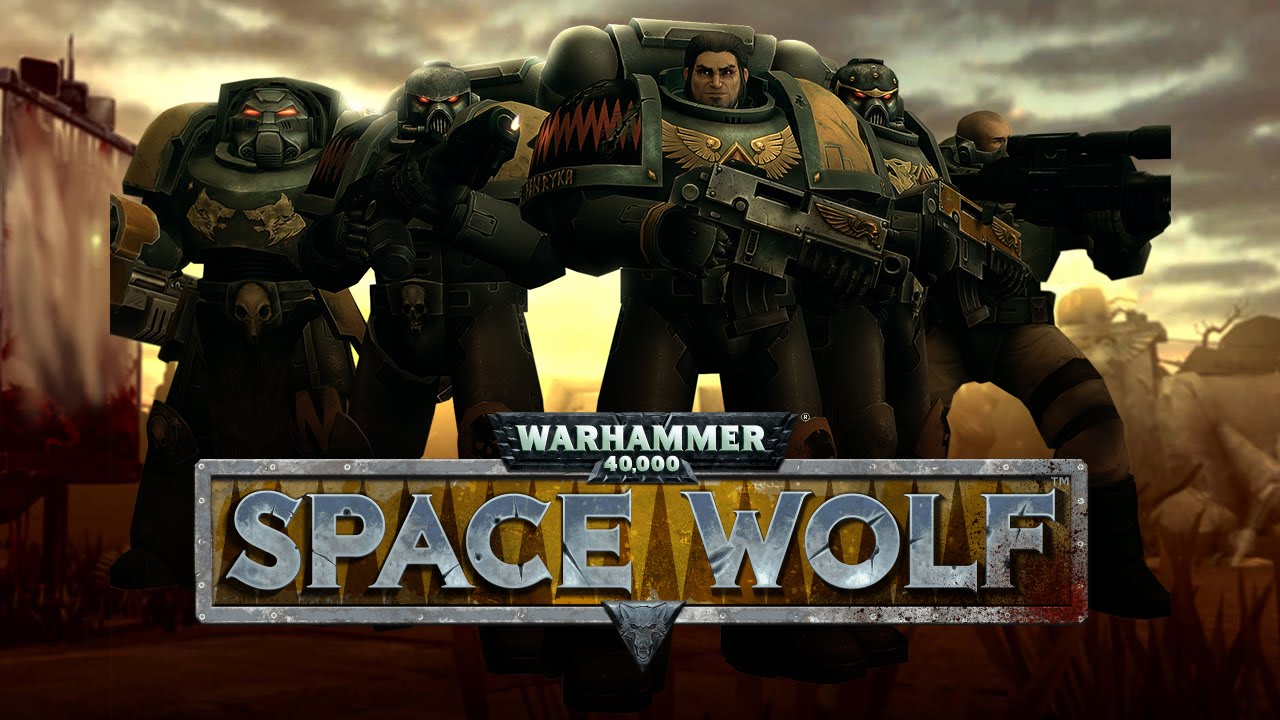
Can you just not get enough of leading Space Marines against the enemies of the Imperium? Then I have good news for you! The latest in the endless march of Warhammer 40k titles has recently released and I'm here to tell you all about it. Warhammer 40,000: Space Wolf, developed by HeroCraft, attempts to stand out from the pack by offering up a fresh mish-mash of genres that work surprisingly well together.

Basically, this is a turn based tactical game that plays out on a grid, where each unit can take two actions per turn, much like XCOM. The twist is that each character takes actions based on cards in their hand. Most of these cards are weapons that have different attack patterns and damage values, from chain swords and power fists to heavy bolters, rocket launchers, plasma guns, and every other weapon you know and love from 40k. Most weapon cards can optionally be used to move your character. Once played, the card goes back into the deck. There are also other kinds of cards, such as dedicated movement cards which let you cover much more ground, healing cards, special weapons which can be permanently equipped and reloaded, and combo cards which give you some kind of bonus simply by staying in your hand.


For the enemy, the cards in hand are usually generic, and based primarily on whether they are ranged or melee fighters. You control your primary character and two fellow Space Marines chosen from a squad of five. Your allies have unique decks based on their class. There's a scout-sniper, a heavy weapons dude, a Terminator, and others. You can tweak their decks to a certain extent, but really their options depend on their class. Your primary character, however, can be fully customized with a 30 card deck chosen from dozens of options. This process feels very much like that of Hearthstone. You can open new booster packs of cards, or spend a currency to randomly generate new cards of a particular power level. Cards come in several tiers, from common to legendary. As you play the game you will unlock more and more cards to toy around with. Gotta' collect 'em all!

Now, one might think that you would simply put all the most powerful cards in your deck, but there is a trade off. Turn order in Space Wolf is dynamic. It changes constantly depending on how much "effort" the most recently active character built up with his actions. More powerful cards add a lot of effort to your character, and whoever has the lowest total gets to go next. So if you play two really strong cards in one turn, some of your enemies may actually get to take extra actions before that character goes again. There are, of course, cards that can help lower your effort faster and offset using a big powerful card. I found this system to be one of the better ideas in Space Wolf, as it gives you a good reason to consider whether you should take an action now, or perhaps delay it until later for greater results.


The tactical decision making is where the game shines. Positioning matters a great deal, since most weapons have a limited firing arc or distinct shape. Some examples include the sniper rifles, which have a very long range, but the arc is only one square wide, so you must be facing the enemy directly. The big power axes can one-shot KO most enemies, but can hit only the single square in front of the Marine wielding them.Other weapons do less damage, but have much wider arcs. The flamethrowers fire in a cone pattern, so you ideally want to engage a group of enemies from medium range to hit several at once. The battlefields of the game are often somewhat cramped, so you need to think ahead as your Marines move to engage. You don't want to have one standing in a spot that denies another a golden opportunity to do some damage, or even keeping one of your soldiers out of the fight entirely. You will need to press every advantage you can, since your Marines are always outnumbered, and often facing a seemingly endless flow of fresh enemies. If you allow too many foes to close within striking distance of your men, you will start taking damage much faster than the limited healing cards can restore it.

Despite being a game that is also available on iPad and Android devices, Space Wolf manages to look quite respectable on PC. The textures and models are simple, but well done, the Space Marines in particular. The huge variety of weapons all have appropriate attack animations and effects, though some are better than others. For example, the flamethrower spews out a ton of fire over a large area and looks great doing it, but the poor bolters only spit out a handful of rounds before going silent. It's a bit underwhelming really, but makes sense for game balance. The melee attacks, I am happy to say, all look quite good and result in blood spraying everywhere. This is 40k after all!


The area where this game struggles the most is scenario design. While the combat itself is entertaining, and there is a surprising variety of locales to fight through, the objective is pretty much always the same: walk through the level and kill enemies as they spawn in around you. Enemies appear here and there and everywhere, which removes any sense of overall strategy from the game. You have no way of knowing whether a new group is going to appear from a direction that makes sense thematically, or just materialize from the ether right next to your Marines. One mission looked to mix this up, by having you defend a Space Marine priest as he performed some sort of ritual, but then all of the enemies simply came running down a single hallway, two or three at a time. This defied the normal expectation in the worst way, it gave you a new objective, but still took away any strategic decision making. At the end of the day, this is a game focused on tactical combat. Kill the enemy faster than they can damage your men, and you will walk away the victor.


In addition to the twenty or so missions of the campaign, there is a survival mode, which you can watch me play here and PvP multiplayer. I tried a couple of times to find an online match, but it seemed no one else was on at the time. Looking at the leader boards, there are at least a few dozen dedicated players out there who have played hundreds of matches online, so I can only assume it works well.

Space Wolf is a good value for the price, you get a lot of places and people to fight, and lots of options for customizing your team. Anyone who is addicted to building decks of cards in Hearthstone or similar will love that aspect of the game. While the combat lacks variety in terms of strategy, it makes up for it with a nice spread of maps and enemy types. There are cultists, corrupted Imperial Guardsmen, Chaos Marines and even more supernatural foes to kill as you progress through the game. The survival mode is almost a game unto itself, since you will need to build a deck focused on long-term sustainability if you want to complete all of the waves. Finally, the online mode is there if you can find an opponent, which is where you would need some real strategy to win. If you are looking for a fresh take on the turn-based tactical genre, and especially if you like purging chaos, give Space Wolf a try.

Developed by HeroCraft
Available on Steam, iOS, and Google Play.

- Joe Beard


Messerschmitt BF 109 by Jan Forsgren  The Bayerische Flugzeugwerke 109, is sometimes called the ME 109, after the d...

Messerschmitt BF 109 by Jan Forsgren Messerschmitt BF 109 by Jan Forsgren

For your Wargamer, Toy soldier collector, MiniFig collector, military history nut. Reviews, interviews, Model Making, AARs and books!


by


 The Bayerische Flugzeugwerke 109, is sometimes called the ME 109, after the designer Willy Messerschmitt. He was actually a designer at Bayerische Flugzeuwerke in the early 1930s.

 The BF 109 was the Luftwaffe's epee to the saber that was the Focke-Wulf 190. Most of the high scoring aces of the Luftwaffe flew in BF 109s, even when given the chance to switch to the FW 190.

 The choice for a contract as the newest Luftwaffe fighter for the BF 109 was not a done deal. As a matter of fact Field Marshal Milch, a high ranking Luftwaffe officer, had a long standing feud with Messerschmitt and his designs. One of Milch's closest friends was killed in an accident flying an early model of an older Messerschmitt design. Milch always held Messerschmitt responsible. The book shows that the fighter BF 109 was derived from the sport plane BF 108. Oddly enough, in warplanes at the time, the Supermarine Spitfire was designed right around the same time, and both planes' lifespan continued throughout the war and beyond. This shows how well made and upgradable the two designs were.

 The author goes into all of the different versions of the BF 109, from describing the fate of all of the different test frames to the BF 109 Kurfurst, ME 209, and the ME 309. A unarmed and specially fitted BF 109 actually held the world speed record for over thirty years.  He also doesn't shy away from all of the BF 109's faults. Although a great fighter, it was a difficult plane to master. Take offs and landings were especially dangerous. One of the BF 109's points in its favor was also its greatest flaw. The landing gear were attached to the fuselage and not the wings. This made replacing the wings, if damaged, relatively easy. However, that made the landing gear very narrow and was hard to taxi while on the ground. The plane also had a tendency to drop one wing when getting close to stall speed in landing, and it came with a real chance of doing a ground loop when taking off. The very narrow landing gear made both habits even worse. In this it should be equated with another excellent fighter, the US Corsair, nicknamed the 'Ensign killer'. Both were spectacular fighters, but both also needed to be flown by a skilled and alert pilot or disaster would ensue. Many BF 109s were damaged or destroyed before their pilots learned their temperament. Some planes are known for their docile flight characteristics; the BF 109 was not one of them. Many fighter pilots prefer a 'twitchy' fighter plane that needs constant attention than docility. For other examples, see the Sopwith Camel and the Fokker DR.1.

 Mr. Forsgren goes into every detail of the BF 109 from its inception to the last flights. The constant upgrading of the plane is shown as well as the attempts to make a Jabo (fighter bomber ground attack plane) out of it. The various upgrades in weapons from two small machine guns to the thirty millimeter cannon on some of the later models is shown. The author also goes into its use in the other Axis countries during the war, and its surprising appearance as a fighter used by Israel in its earliest battles.

 The book also comes with various tables and 120 pictures of the aircraft and different close ups of various parts of the designs. I can easily recommend the book to a newbie who is just starting to learn about the BF 109, but the book is also full of facts for the aficionados of the plane. As a matter of fact I liked the book so much, I am looking to get my hands on the author's book on the Ju-52. The Junkers 'Tante ju" has always interested me.


Robert


Author: Jan Forsgren
Publisher: Fonthill Media
Distributor: Casemate Publishers
hpssims.com