second chance games

Search This Website of delight

Durchbruch The Austro-German Attack at Caporetto 1917 by Acies Edizioni   It is the Fall of 1917. Austro-Hungary...

Durchbruch The Austro-German Attack at Caporetto - October 1917 by Acies Edizioni Durchbruch The Austro-German Attack at Caporetto - October 1917 by Acies Edizioni

For your Wargamer, Toy soldier collector, MiniFig collector, military history nut. Reviews, interviews, Model Making, AARs and books!


Durchbruch

The Austro-German Attack at Caporetto 1917

by

Acies Edizioni


  It is the Fall of 1917. Austro-Hungary is hard pressed because of the immense losses of manpower on the Eastern Front earlier in the war. The Austro-Hungarians need Italy knocked out of the war as quickly as they can be. Either that or their whole army might crack, and if they fall Germany is right after them. The Austro-Hungarians cannot do it alone. They have needed Germany's help as long ago as 1914.  There had already been eleven Battles of the Isonzo, and Italy and Austro-Hungary were bleeding each other dry. The new Austro-Hungarian Emperor Karl I knew it was only a matter of time before one or the other country broke through on the Isonzo Front. He appealed to the German Kaiser Wilhelm II. Of course, he didn't run Germany at the time; Hindenburg and Ludendorff did. Ludendorff turned down the idea, but was overridden by Hindenburg. A relatively small force of German divisions was added to the mix for the attack. The attack's success has been attributed, at times, to the German Stosstruppen and their tactics. What isn't well known is that both the Italians and Austro-Hungarians had their own shock troops. The Italian troops were called Arditi, and the Austro-Hungarians were called Sturmpatrouillen/Jagdkommandos. The Austro-German attack at Caporetto broke the Italian Front wide open. It was at Caporetto that Erwin Rommel won his Pour le Merite. So the battlefield is mountainous and the Austro-German force must break through in a very short timetable. Ludendorff wants those divisions back for his spring offensive. I have always been very intrigued by the Battle of Caporetto and the Italian front in World War I, and have read everything I could get my hands on about it. How does Acies Edizioni's game stack up?


This is what you get with the game:

Two 23" x 33" Maps
Two counters sheets ( 5/8" counters)
Each Hex is 1" Wide
Six Full Sized Glossy Colored Player Aids
 Morale Check
 Combat Table and Modifiers
 Barrage Communications and Stacking
 Terrain Effects Chart
 Italian Army Setup
 Austro-Hungarian and German XIV Army Setup
 Rulebook
Two Six-Sided Die

Every day is divided into two turns. The first day
has one more Preliminary Phase.
A hexagon on the map corresponds to about
1000 meters.
The unit counters represent infantry battalions/
regiments and minor units.


 The maps are spectacular. With the large hex size and the colors chosen they are very easy to read, and figure out what terrain is in each. The Player Aid sheets are likewise extremely large and very easy to understand. The counters are also very well done. They have a lot of information on each one, but are not cramped, and are easy to read. The Rulebook is in full color and is only twenty pages in length. Once again, the rulebook is up to the standards of the rest of the components. This is my first look at a wargame from Acies Edizioni and I am really impressed.


 The Rulebook seems small, but sometimes very good things come in small packages. 

The game comes with three scenarios:
October 24th Scenario (One Day Scenario)
October 25th Scenario (One Day Scenario)
Caporetto's Breakthrough Scenario (Campaign Scenario; It Lasts 10 Turns)
 Each scenario has the Austro-German Player adding up his Victory Points and comparing them to the Victory Conditions. He gains points for Victory Hexes and eliminated Italian Counter Steps, and loses them for each Counter Step he loses.


 Continuing with the Rulebook, the game has rules that deal with the following:

Making a Passage through No Man's Land and First Line Trenches
Bridge Destruction or Repair
Fog of War
Mountain units
Engineer units - These can make a Passage, Repair or Destroy Bridges
Machine Gun Companies
German Pioneer Units Gas Attacks
Assault Units and Rommel
First Turn German Bombardment
Dummy Markers used on both sides


 This is along with all of the usual stacking and Zone of Control rules etc.

 The game is based on the Chit Pull method. At the start of the game the Austro-German starts with four Chits (Corps), and the Italian starts with three. Once all of the Chits are pulled, then that is the end of one turn. This is the Sequence of Play:


1- Bridges - construction or demolition Segment
2- Command Segment
3- Artillery Segment
4- Movement Segment

5 - Assault Segment

There are many exceptions to the normal rules on the First Turn. Such as: 

All Austro-German artillery can fire in the Preliminary Phase.
Up to 20 Austro-German units can move and attack in the Preliminary Phase

The Austro-German player must pick one of three plans before the start of the Campaign Game. These are:
The Conrad von Hotzendorff Plan - Large
The Boroevich Plan - Limited
The Waffentreue Plan - This is the one that was chosen.


 So, how does it play? It plays extremely well, and in my eyes captures the history of the battle to a T. This does not mean that every game plays out the same with a guaranteed German victory. Far from it; the design allows either side to be able to pull out a victory. The chance for the German Player to try out the different plans also leads to an increase in playability and the longevity of the game on your table. Playing as the Germans, you should play 'hell bent for leather'. The German Player's advance and attack plan should be to ignore Italian strong points and go for infiltration first. The German Player must always be conscious that he loses a Victory Point for every step lost. Playing as the Italian Player you have to know when to cut and run. He must use every chance he gets to stay in front of the Austro-German Units and make them fight for any and every piece of ground he can. The German Player only gets a Victory Point for every ten Italian Player Steps lost. So, the Italian Player can afford to trade troops for time and space. The game comes with excellent components, and the designer has added all the rules that deal with everything that happened in this battle. My hat is off to Acies Edizioni. 


 There was some problems with the first Rulebook and Players Aids that had been sent out. In talking with the designer, what happened was that the printer was sent the first files and not the redone ones (none of us have ever done that :) ). So anyone who purchased the game was sent out the second edition rules ASAP. The 'living rules' are exactly the same as the printed second edition.

Acies Edizioni link:
https://www.edizioniacies.com/

Durchbruch link:
https://www.edizioniacies.com/para-bellum/durchbruch

Living Rules link:
https://drive.google.com/file/d/1bNrgR82KKg_D_GqQnVVFcL7vQcarKS_W/view


Robert


First Look at the Upcoming 'Fire and Rubble' the First Module for  Combat Mission Red Thunder  Th...

First Look at the Upcoming 'Fire and Rubble' the First Module for Combat Mission Red Thunder First Look at the Upcoming 'Fire and Rubble' the First Module for Combat Mission Red Thunder

For your Wargamer, Toy soldier collector, MiniFig collector, military history nut. Reviews, interviews, Model Making, AARs and books!


First Look at the Upcoming 'Fire and Rubble' the First Module for 

Combat Mission Red Thunder


 This is just a quick sneak peek at some screenshots of what Battlefront has been hard at work on. It is called 'Fire and Rubble', the first module for their Red Thunder game. Red Thunder is one of my favorite of the Combat Mission stable of games, and I am very happy to see that it is finally getting some love. So without further ado, here are the screens, and at the bottom will be some links for Battlefront games. 


 It is looking good, and please Battlefront keep your excellent games and modules coming!

Battlefront:
Combat Mission Red Thunder:

My review of the 'Rome To Victory' module for Fortress Italy:

My review of 'Shock Force 2':

Robert

 Interview with Scott H. Moore Designer of 'This War Without an Enemy' Released by Nuts! Publishing  Ple...

Interview with Scott H. Moore designer of This War Without an Enemy released by Nuts Publishing Interview with Scott H. Moore designer of This War Without an Enemy released by Nuts Publishing

For your Wargamer, Toy soldier collector, MiniFig collector, military history nut. Reviews, interviews, Model Making, AARs and books!


 Interview with Scott H. Moore

Designer of 'This War Without an Enemy'

Released by Nuts! Publishing


 Please give us some biographical information about yourself.

I was born in Sheffield but mainly grew up in the suburbs of Birmingham. My brother and I played games like Monopoly, Risk and Campaign when we were really young kids, but it was Christmas 1982 that really converted me into a gaming geek: we got our first computer – a ZX Spectrum complete with The Hobbit adventure game – plus the Warlock of Firetop Mountain gamebook. By the age of 11 or 12, I was wargaming the English Civil War with 25mm miniatures, and playing Games Workshop games such as Talisman and Warrior Knights. A few years later I started roleplaying with AD&D, MERP and Warhammer RPG. When we were 16, a few friends and I joined the English Civil War re-enactment society as pikemen in Colonel John Fox’s Regiment of Foote.
Not long after I had gone to university to study Physics I more or less gave up on gaming, except for the occasional roleplaying session back home in the holidays. After graduating, I spent a year in Spain, then I did a degree in Optical Electronics in Glasgow and Hamburg. When I finally entered the world of work, it was as a market analyst. I lived in London for a while, briefly in Prague, and then over a decade in Budapest. It was there, about 20 years ago, that I got back into gaming when I discovered both euro games (Catan, Carcassonne) and modern wargames (Hammer of the Scots). The boardgaming scene was just taking off in Budapest at that time, so I had plenty of opportunities to experience the renaissance of the 2000s led by designers such as Reiner Knizia and Wolfgang Kramer. In contrast, Hungarian wargamers were few and far between (they still are). I was lucky enough to find a few willing victims who I could explore light and midweight contemporary wargames with – we played a lot of block games, Command & Colors and CDGs such as Hannibal and Paths of Glory. I also got to know the only ‘serious’ wargamer living in Budapest at that time – Stéphane Acquaviva (designer of Hungarian Rhapsody). We played through the entirety of Great Battles of History, he introduced me to some classic Napoleonic Games and I could sometimes persuade him to try a CDG or a game from the Musket & Pike series. But the main focus of our hundreds of hours spent during Sunday gaming sessions were the campaign scenarios from the various volumes of MMP’s OCS series.
Several years ago, I returned to Birmingham having changed career to work as a translator. The gaming scene is very strong here – one of the world’s largest tabletop gaming conventions, the UK Games Expo, is held here once a year and has really helped to create a vibrant gaming ecosystem in the city. I attend a few different boardgames clubs every week, so I get to play a wide variety of games: euros, cooperative games, wargames, and even traditional RPGs. As part of the Birmingham Game Designers group, I organise an event every two months where boardgame, wargame and RPG designers can playtest their games with the gaming public. We also have more focused designer meetings four times a month. 


What was your first game design?

When I was about 12 years old, I created an Asterix board game based on Talisman, though I never finished the artwork and it I probably tested it no more than once or twice. When I became a serious hobby gamer 20 years ago, I also began designing games again. Although I’m usually inspired by history, my first completed prototype was a 2-player block wargame called The Long Winter based on a section in the Appendices of the Lord of the Rings (Appendix A, II, The House of Eorl). I was never going to be able to get a game on that topic published, but a couple of ideas I developed for The Long Winter did eventually find their way into This War Without an Enemy.

Why the English Civil War?

As I’ve alluded to already, I’ve been intensely interested in this period of history since I was a kid. The first English Civil War, in particular, is a fascinating narrative, full of colourful characters, closely-fought battles, important sieges and more than one reversal of fortune. I began designing a strategic game on the war many years ago, but the publication of Charles Vasey’s Unhappy King Charles in 2008 put paid to that, as it fulfilled most of what I wanted my design to do. However, a few years later Columbia Games listed the ECW as a topic they were considering publishing a game on. By offering to design it for them, I could combine my love of both block games and the historical period.
  
In what way is your design for This War Without an Enemy  different than others?

As my game was originally designed for Columbia, it very much followed in the mould of games like Crusader Rex and Richard III. However, when I moved to a different publisher – Nuts! Publishing – I wanted to differentiate it from those earlier block games, while at the same time I realised that I had the freedom to increase the complexity level slightly and add in more historical atmosphere. I think there are three main areas where This War Without an Enemy differs from most other block games:
The card decks: I decided early on in the design process to have a separate deck for each player. As a civil war, both sides in the ECW were very similar to each other in many ways, so I wanted to tease out the differences – and introduce more asymmetry to the game – with specific event cards. There are too few cards in total for the player decks to be further split into early, mid and late war decks, and so I introduced a mechanism for adding and retiring cards from each deck. The cards in most card-driven block games provide either points to spend or, more rarely, an event. In TWWE, most cards have both. This allowed me to balance the cards and avoid the possibility of a player having an inherently good or bad hand of cards. Each card either provides a lot of points (4) to spend on movement and/or recruiting; fewer points (2) but a strong event; or something in between (3 points and a weaker event).
Assaults and sieges: although the battles during the ECW are far better known than the sieges, it was the latter that were more important for the outcome of the war. Victory in TWWE is mainly determined by capturing cities, and so the rules around this needed to be well thought out. You can take a city through storming (assault), which is risky but can be quick, or through a siege (blockade), which is slow but sure. The mechanism for storming is similar to that for a battle, but artillery plays a more important role – if you breach the walls using artillery (or Mining via an event) then the city provides a much less significant defensive bonus. Sieges are resolved by rolling a die and consulting a table – this determines any attrition for the defender and eventual surrender. Ports can hold out longer than inland cities and can be reinforced by sea.
The Battle Mat and battle resolution: this has probably been the most popular part of the game. Although I retained the basic mechanism from other block games, I added more historical chrome and more player decision-making (in most block games, the only significant decision during battles is if and when to retreat blocks). The Battle Mat is essentially a player aid that makes battles easy to resolve despite the increased complexity. There are specific rules for artillery and cavalry blocks that replicate their role on the mid-17th century battlefield (yes, Prince Rupert’s cavalry can end up pursuing their opponents off the battle field!). When it comes to infantry blocks, a player must decide every round whether to fire at a distance with the muskets (which is less effective but happens early on in the round) or engage at close quarters with the pikes (more effective but take place at the end of the round). I believe this extra set of decision points makes battles them much more interesting for players.


Is there anything in the game that you would haved liked to be different because you had to compromise, or perhaps some part of the design that gave you fits?

As I have mentioned already, my move to Nuts! Publishing game me the freedom to change my game beyond the confines of the Columbia system. So, in the end, I had full control over the design of the game and did not have to make any compromises. My aim with TWWE was to create a game that is easy to learn, plays in no more than 3 or 4 hours, and yet contains a lot of history. I hope I have achieved this. 
I did not have difficulties with any particularly part of the design process. Basing my game on an existing system meant that it was fairly easy to develop an initial prototype. When I later chose to change the game, it was more of an evolution of an existing game that was working well. The trick was to add more chrome and historical atmosphere without compromising playability. Perhaps the most challenging part of the game to get right – and this is something that really gives it the flavour of the English Civil War – was the regional aspect. While the main field armies of the King and Parliament generally campaigned across the centre of the country, there were virtually autonomous regional theatres of war in the north and southwest of England. Unhappy King Charles simulates this in various ways, but I wanted a simpler approach for TWWE. Essentially, most blocks belong to one of five regions of England and Wales. Each block can only recruit (add strength) in its home region and may not leave, or remain outside of, its home region unless ‘chaperoned’ by a Leader block. 

Anything else you would want to emphasize or add to?

Something that I haven’t mentioned yet is the artwork and graphic design of This War Without an Enemy. This was a long process for both the publisher and I, but eventually we were very fortunate to find Nicolas Roblin and persuade him to do his very first board game commission. Working with Nicolas was a very collaborative experience, but the success of the final design was mainly due to his extensive research, passion and dedication – and, of course, his natural talent. He spent days in a library just to find the period illustrations for the cards. But it is the box cover illustration and the gorgeous map art that have attracted the most praise from people – they elevate the look of the game beyond anything I could have hoped for when I first started designing it all those years ago.

Thank you

Robert

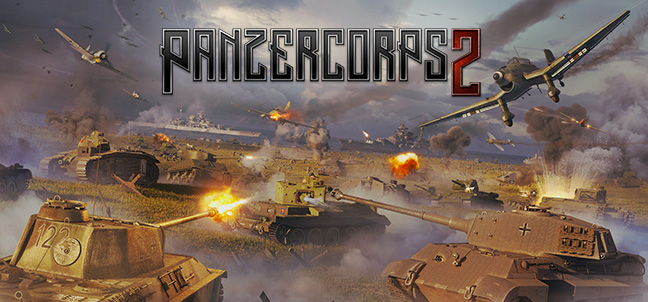
Panzer Corps 2 is just over the horizon! The long awaited sequel to one of Slitherine's biggest titles comes out ...

Panzer Corps 2 - First Look Video and Open Beta for Field Marshal Pre-Orders Panzer Corps 2 - First Look Video and Open Beta for Field Marshal Pre-Orders

For your Wargamer, Toy soldier collector, MiniFig collector, military history nut. Reviews, interviews, Model Making, AARs and books!


Panzer Corps 2 is just over the horizon! The long awaited sequel to one of Slitherine's biggest titles comes out March 19th, and you can see a bit of gameplay in my video below. If you want to play the game yourself, then you are in luck. Those who pre-order the Field Marshal edition (includes first two DLC and other goodies) will have access to a similar beta version from Feb. 18th to the 20th. So if you loved the first game, go ahead and hop in, this one looks to be a winner no doubt. If you're curious, check out my video and others. 


Please Note: I had some kind of unexpected issue with my recording, which resulted in it looking quite laggy when moving the camera around quickly. This is not reflective of the actual game, which runs perfectly smooth. I'll try to fix it and get a better version out when I can.


- Joe Beard
hpssims.com